
Most people think their biggest obstacle is out there, in the workload, the relationship, the diagnosis, or the thing they cannot seem to change. But what if the real barrier is the picture your brain keeps running on repeat, the one where things go wrong, where you fall short, where the worst case becomes the expected case? That internal footage shapes your nervous system, your decisions, and your outcomes far more than most people realize. Visualization is not wishful thinking or motivational fluff; it is a clinically supported mental skill that rewires how your brain prepares for and responds to challenge. In this post, you will learn exactly how it works, why it matters for mental health, and how to start using it today.
Before the Race Even Started, I Had Already Won It
The water was cold before I even touched it. I knew that because I had already entered it dozens of times.
I am standing at the edge, eyes closed, the morning air carrying that particular mix of salt and sunscreen and nerves that exists only at race starts. My heart rate is steady. Not because I am calm in the ordinary sense, but because I have already been here. I have already felt the first shocking resistance as my body hit the water, already found the rhythm of my stroke and breathing, already counted the seconds between sighting the buoy and pulling my line back in. I have already heard the click of my cleats locking into the pedals at the transition zone, that small mechanical confirmation that the next phase has begun. I have already felt my legs begin to burn somewhere around kilometre thirty of the run, the kind of deep muscular ache that asks a serious question. And I have already crossed the finish line, felt the specific lightness that lives on the other side of that question.
None of this had happened yet. But in every way that mattered to how I would perform, it already had.
This was not a ritual or a mindset trick I had read about. It was how I trained. Mental rehearsal was as real a part of my preparation as any early morning session in the pool. And looking back, I can see that discovering the power of visualization for mental health and performance was something I stumbled into through sheer necessity, long before I had the language to explain it.
What Visualization Actually Felt Like as a Triathlete
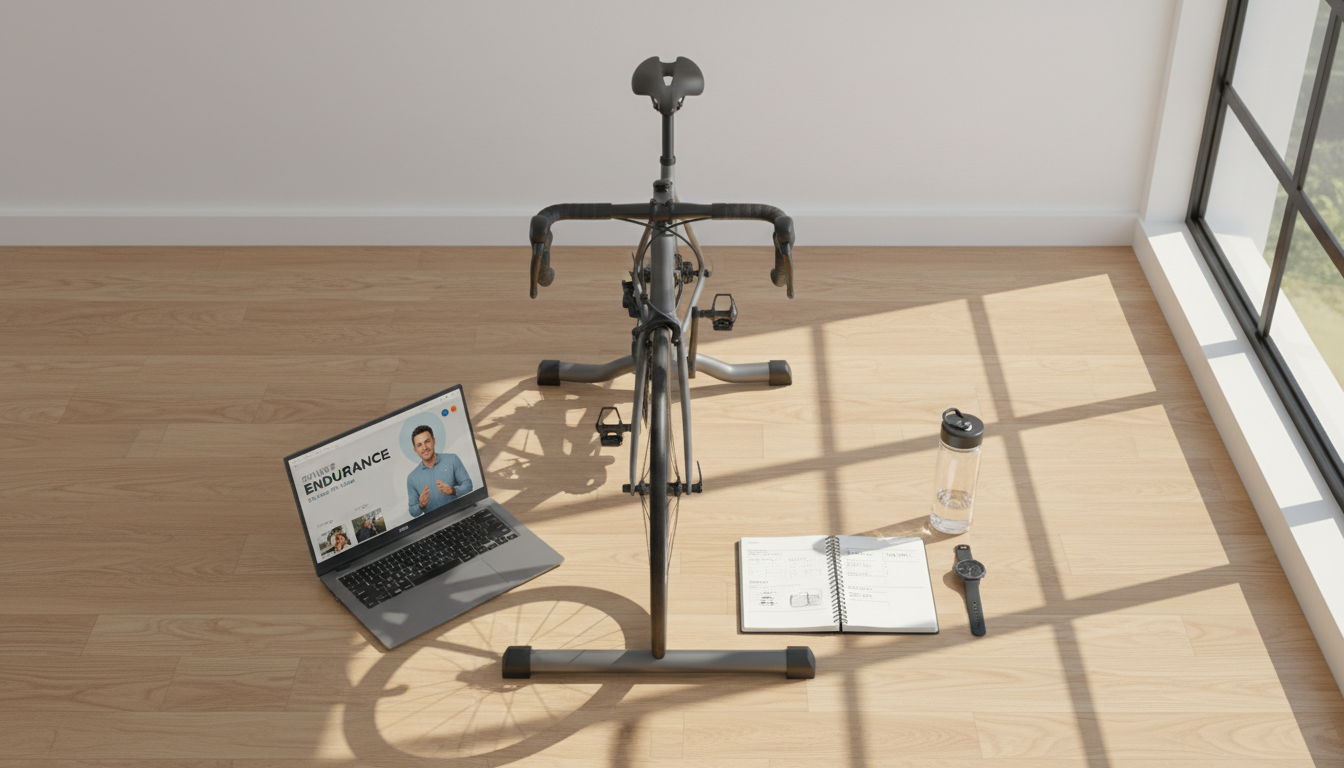
The night before a race, I would find the quietest room I could and go through the entire course in real time. Not a highlight reel. Not a vague sense of doing well. I mean every segment, at roughly the pace I expected to hold, with the specific variables I was expecting to face. If there was a headwind forecast on the bike leg, I rehearsed into the headwind. If a particular transition was known to be awkward, I rehearsed the awkward transition. I was not constructing a fantasy. I was building a map my body could follow when things got hard.
This was the texture of it: specific, embodied, and repeated. The rehearsal had to have weight. I could feel the pull of the water against my forearms, the slight miscalculation when I reached for my helmet too fast, the moment around kilometre twenty-five on the run when the body starts negotiating and the mind has to hold firm. I had to live through the difficult parts in my imagination, not skip past them.
Doubt came in too. That is worth naming. There were nights when the mental image of the finish line felt thin, almost unconvincing, and I had to return to it deliberately, the way you return your attention to your breath in meditation. That act of returning was part of the training. Learning to hold a clear vision under internal pressure turned out to be as important as any interval session.
This approach carried me through some of the most demanding races of my life, including competitions where I was pushing toward world record times. I did not know it then as sports psychology. I knew it as the only method that actually worked. Years later, when I encountered the research confirming that mental rehearsal activates many of the same neural pathways as physical practice, it felt less like a revelation and more like a formal introduction to something I had already been living.
Why Your Brain Cannot Tell the Difference Between Real and Vividly Imagined

Years after those pre-race rehearsals had become second nature, I started reading the research behind what I had been doing intuitively. What I found was not surprising so much as clarifying. When you vividly imagine an action, your brain activates many of the same neural pathways as when you actually perform it. The premotor cortex, the region involved in planning and initiating movement, responds to vivid mental imagery in ways that closely mirror its response to real physical experience. This is the foundation of embodied cognition, and it is also why visualization and neuroplasticity are so closely linked; the brain is literally being shaped by what you imagine, not only by what you do.
For me, reading this felt like meeting the explanation for something I had already trusted with my body. Those nights in a quiet room, rehearsing a headwind on the bike leg, were not psychological comfort rituals. They were training. Real training, measured in neural repetition rather than kilometres.
This is exactly the same principle that makes guided imagery a genuinely useful tool in therapy, not a soft alternative to real work, but a method that engages the brain's own architecture. The power of visualization in mental health rests on this same biological reality: the mind does not cleanly separate the vividly imagined from the lived. That is not a limitation. Once you understand it, it becomes something you can work with.
The Ikeda Principle: Envisioning Victory as an Act of Perseverance
Some time after my racing years, I came across a line from the philosopher and peace educator Daisaku Ikeda: 'When you clearly envision the outcome of victory, engrave it in your heart, and are thoroughly convinced that you will attain it, your brain makes your ideals into reality.'
I did not read it as instruction. I read it as recognition.
This was a description of what I had been doing on race mornings for years, in quiet rooms, rehearsing finish lines that had not yet been crossed. Ikeda was not offering a shortcut or a positive thinking formula. He was describing something that requires genuine discipline, the sustained act of holding a clear image under pressure, returning to it when doubt arrives, refusing to let it go hollow.
What strikes me most in his words is the phrase engrave it in your heart. Not place it somewhere convenient. Not visit it occasionally. Engrave it. That is a word that implies effort, repetition, and permanence. It is the language of perseverance, not passive hope.
In a long race, perseverance is visceral. You feel it in your legs at kilometre thirty. But the same quality is needed in the slower, quieter endurance of personal growth and mental health recovery, where the finish line is harder to picture and progress is rarely linear. The power of visualization in mental health lies partly here: in giving the mind something specific and felt to move toward, even on the days when moving at all feels like enough.
How I Use Visualization in Therapy Sessions Today

That same discipline of rehearsal I brought to race preparation, I now bring into the therapy room, both in Calp and with clients I work with online.
The way I introduce visualization in individual therapy sessions varies depending on what someone is carrying. For a client managing anxiety around a specific situation, a difficult conversation at work or a social encounter they have been avoiding, we build a detailed mental image of moving through it calmly. Not perfectly. Not without discomfort. But with steadiness. The rehearsal includes the anxiety itself, just as my race rehearsals always included the hard kilometres. The goal is familiarity, not fantasy.
For someone rebuilding their sense of self after a painful relationship, I sometimes guide them toward a future image of themselves that is specific and felt rather than vague and aspirational. Not "a better version of me" but a precise picture: how they are sitting, what they are doing, the quality of ease in their body. The brain responds to that specificity. Vague positive thinking does not engage the same neural architecture that detailed, embodied imagery does.
With clients processing grief, visualization can create access to something the loss has made feel unreachable: a moment of genuine peace. Not escape from the grief, but evidence that peace is still possible inside the same life that holds it.
This is the core principle across all of it. The power of visualization in mental health is not about pretending pain does not exist. It is about training the mind to hold the possibility of something different alongside what is hard.
Many clients arrive skeptical, which is completely reasonable and always welcome. Skepticism in the room means we can actually examine the method together rather than taking it on faith. That conversation itself tends to be useful.
A Simple Visualization Practice You Can Try Right Now

If you want a direct experience of what this article has been describing, here is a simple place to start.
Find somewhere quiet where you will not be interrupted for five minutes. Sit comfortably, close your eyes, and take three slow breaths. Not performed breathing, just air moving in and out at a pace that feels easy.
Now bring to mind one specific moment in your life when you felt genuinely capable, calm, or clear. Not your best day ever. Just a real moment, however small. Maybe you handled something difficult with more steadiness than you expected. Maybe you were somewhere that felt safe and your body knew it.
Build that moment in sensory detail. Where are you? What can you hear, feel, or smell? Notice the quality of light, the temperature, the particular ease in your chest or shoulders. Stay there. Let it be specific rather than symbolic.
After a few minutes, carry that same felt quality forward into an imagined future moment. Not a vague hope, but a concrete scene: where you are, what you are doing, how your body feels. Hold it with the same specificity.
That is it. No promise of transformation, just an introduction to a skill.
Like any skill, it develops through repetition. For those working through anxiety, low confidence, or significant life transitions, this kind of practice becomes considerably more useful when it is guided and tailored. That is part of what I do in individual therapy sessions, both in person in Calp and online.
The Finish Line Is a Picture You Draw First
There is a version of me still standing at that water's edge, eyes closed, finishing a race that had not yet begun. I return to that image often, not out of nostalgia, but because it holds something true about how change actually works. You have to be able to picture where you are going before your body knows how to get there.
The power of visualization in mental health is not a shortcut and it is not magic. It does not replace the hard work of therapy, the courage it takes to show up honestly, or the slow accumulation of small real actions. What it does is give the mind a direction. A specific, felt, repeatable direction.
That is what I was doing at the start line. That is what I am doing now, in a different kind of room, with people navigating their own long courses.
If any of this resonates, I would be glad to get in touch to explore working together. No pressure, just a conversation.
Mastering your mental state through visualization is more than just a technique for athletes; it is a fundamental shift in how you approach every challenge in life. By training your mind to focus on success, you build the resilience needed to reach your goals. If you feel ready to explore these strategies further with expert guidance, you can learn more about my journey and approach. Together, we can refine your mindset and help you achieve the results you have always envisioned.