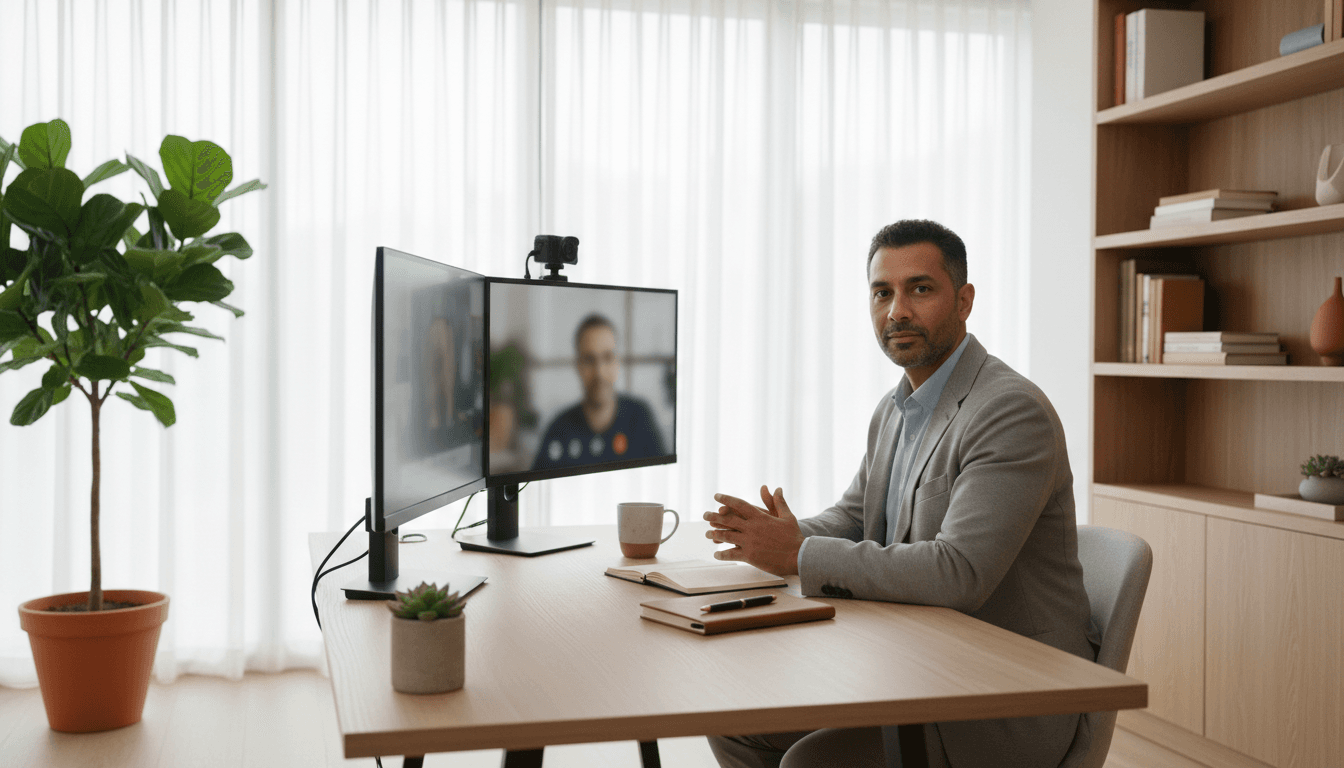
Your first online therapy session typically involves discussing your background, current challenges, and goals while establishing a connection with your therapist. This initial meeting focuses on logistical setup and building trust; it is a powerful first step that sets the tone for your long term healing journey.
You have probably been sitting with the idea of trying therapy for weeks, maybe months, telling yourself you will start when things calm down, when you feel ready, when you have more time. But here is the truth: that moment rarely arrives on its own. The decision to book your first online therapy session is often the hardest part of the entire process, and most people walk into it with a mix of hope, uncertainty, and a quiet fear of not knowing what to expect. This post will walk you through exactly what happens in that first session, how to prepare your space and your mindset, and why taking this one step, however imperfect, tends to be the most significant move you can make for your mental health.
Why That First Step Feels So Hard (and Why You Should Take It Anyway)

If you have been thinking about booking a therapy session for weeks, or even months, you are not alone. Most people who eventually reach out have spent a long time sitting with the idea first, turning it over quietly, wondering if now is the right moment.
That hesitation usually comes from a handful of very human fears. There is the worry about being judged, about a stranger seeing the parts of you that feel messy or difficult. There is the uncertainty of not knowing what to say, or whether you will be able to explain yourself clearly. Some people carry a nagging doubt that therapy simply will not work for them. And perhaps the most common barrier of all: the quiet, persistent feeling that your problems are not serious enough to warrant support, that others have it worse, that you should be able to manage on your own.
These thoughts are not signs that therapy is wrong for you. They are signs that you are human.
The truth is, reaching out takes courage, and that act of courage, however small it feels, is already a form of self-care. You do not need the perfect words, a crisis point, or absolute certainty. You just need to take one step.
What Actually Happens in a First Online Therapy Session

So you have taken that step and booked your first online therapy session. Knowing what to expect next can make the difference between arriving feeling grounded and arriving with your stomach in knots.
The session typically begins with a quick technical check, just a minute or two to confirm that audio and video are working clearly on both sides. There is no pressure to have everything perfectly set up; the therapist will work through any small glitches with you calmly before anything meaningful begins.
From there, the opening is genuinely warm rather than formal. You are welcomed, given a moment to settle, and reminded that this time is yours. There is no intake form to recite and no checklist to get through.
Martin will then ask some open, unhurried questions about what brought you here. These are not trick questions and there are no wrong answers. You might be asked something as simple as "What has been on your mind lately?" or "What made you decide to reach out now?" You are not expected to deliver a neat summary of your life or to have everything figured out. Sharing a little, or a lot, both work equally well at this stage.
You will also hear about how sessions are structured, what confidentiality means in practice, and the general therapeutic approach being used. This part matters because it gives you a clear sense of what working together might actually look like, so there are no surprises later.
Before the session closes, there is always space for your own questions, about the process, the therapist's background, or anything else sitting in the back of your mind. Think of the whole hour less as an assessment and more as a guided conversation between two people deciding if they can work well together.
How to Set Up Your Space for an Online Session

Once you know what to expect from the conversation itself, a little practical preparation goes a long way toward helping you feel settled before your first online therapy session even begins.
Start with the room. Choose somewhere private, ideally with a door you can close, and let anyone else in the house know you need uninterrupted time. If you are using headphones, which is genuinely worth doing, they improve audio quality noticeably and give you an extra layer of privacy even in a shared home.
Check your device is charged and connected to a stable internet connection before you sit down, not five minutes into the session. A laptop or tablet tends to work better than a phone propped on a desk, partly because the camera sits closer to eye level. Looking slightly down into a screen can create an odd dynamic; having the camera roughly level with your face makes the conversation feel more natural for both of you.
If possible, sit facing a window or a source of natural light rather than with the light behind you. It helps the therapist see your expressions clearly, which genuinely supports connection across a screen. A glass of water nearby is also worth having, more people find themselves needing it than expect to.
And if the dog barks or someone knocks at the door? That is fine. A brief real-life interruption has never yet derailed a meaningful session. The goal is a space that is good enough, not a studio setup.
Is Online Therapy as Effective as In-Person Therapy
The question comes up often, and it deserves a direct answer. A substantial body of research now supports online therapy as equally effective as face-to-face therapy for a wide range of concerns, including anxiety, depression, stress, and relationship difficulties. The medium changes; the quality of the therapeutic relationship and the outcomes it produces largely do not.
Beyond effectiveness, online therapy carries some genuine advantages that are worth naming honestly. There is no commute, no sitting in a waiting room working yourself into a knot before the session even begins, and no need to compose yourself for a drive home afterwards. You are already in a space that is familiar and, ideally, comfortable. Many people find they open up more readily when they are not in an unfamiliar clinical setting.
For people living along the Costa Blanca, including the coastal towns and quieter inland areas of the Alicante region, access to specialist therapeutic support has not always been straightforward. Online therapy removes that barrier entirely. A reliable internet connection is all that separates you from a qualified therapist, regardless of where you are.
That said, some people genuinely prefer the physical presence of in-person therapy, and that preference is completely valid. This is not a question of one being better than the other; it is a question of what works best for you.
What You Might Feel After the First Session

Knowing what to expect from the session itself is one thing. Knowing what to expect from yourself afterwards is something most people are not warned about, and it can catch you off guard.
Some people close the laptop after their first online therapy session feeling noticeably lighter. There is a relief that comes from finally saying something out loud that has been sitting quietly inside for a long time. Others, though, feel the opposite: a little wrung out, emotionally tender, or suddenly more aware of feelings they had been keeping at arm's length. Both of these responses are entirely normal, and so is anything in between.
That sense of being stirred up after a session is not a sign that therapy is making things worse. It is usually a sign that something real was touched. Meaningful work has a texture to it, and that texture is not always immediately comfortable.
Being gentle with yourself in the hours after a session matters more than most people realise. A short walk, a warm drink, some quiet time without a screen, or a few minutes writing in a journal can all help you settle back into yourself. There is no prescribed routine; it is simply about giving yourself a little space to land.
You do not need to analyse the session or arrive at conclusions straight away. Let it sit.
Common Questions Before Your First Online Therapy Session
Those questions that feel too awkward to ask directly? They are usually the most important ones. Here are honest answers to the ones that come up most.
Do I have to talk about my whole past? No. You set the pace entirely. A first online therapy session is not an excavation. If something from your past feels relevant and you want to share it, you can. If it does not, you leave it aside. Nothing is required.
What if I cry? That is completely fine, and it happens more often than most people expect. Tears are not a sign that things are going badly; they are often a sign that something matters. There is no need to apologise or hold back.
What if I go blank and have no idea what to say? Martin will gently guide you. A silence or a moment of not knowing where to begin is not a problem to solve; it is simply part of the conversation. You will not be left sitting in an awkward void.
Can I stop if I feel uncomfortable? Yes, always. You are in control of what you share and how the session unfolds. If something does not feel right, saying so is entirely appropriate.
How many sessions will I need? This genuinely varies from person to person and depends on what you are working through. Your first session is a natural moment to explore this, and a good therapist will give you an honest, realistic picture rather than a vague non-answer.
Taking the First Step with Martin

If any of this has resonated with you, it may be worth listening to that. Martin offers individual therapy sessions online designed to feel calm, safe and genuinely welcoming from the very first moment of contact. The practice is based in Calp but the location is not important with online therapy, which means that quality therapeutic support is within reach wherever you happen to be.
You do not need to have everything figured out before you get in touch. A first enquiry carries no commitment; it is simply a conversation. If you have a question about how sessions work, what to expect, or whether this might be right for you, you are welcome to reach out to onlinewithmartin and ask it.
The rest of this article has walked you through what to expect. Now only one thing remains. The first step really is the most powerful one.